
 Add Us As A Trusted Google Source
There’s something magical about the combination of wine and cheese. Both are products of terroir, time, and tradition. Whether you’re planning an intimate gathering, a vineyard picnic, or simply want to elevate your weeknight dinner, understanding the fundamentals of wine and cheese pairing will transform how you experience both. And when you combine Virginia’s exceptional wines with thoughtfully chosen cheeses, you’re in for something truly special.
The Basics of Wine and Cheese Pairing
The beauty of pairing wine and cheese lies in finding harmony between complementary or contrasting flavors. While there are no absolute rules (personal preference always wins) understanding a few key principles will help you create combinations that enhance both the wine and the cheese.
Match Intensity with Intensity
The most fundamental principle is to match the weight and intensity of your wine with your cheese. Delicate wines pair best with mild cheeses, while bold wines can stand up to strong, pungent varieties. A subtle fresh chèvre would be overwhelmed by a robust Cabernet Sauvignon, just as a powerful aged cheddar might dominate a light Pinot Grigio.
Consider Acidity
Acidity in wine acts as a palate cleanser, cutting through the fat and richness of cheese. High-acid wines like Sauvignon Blanc, Riesling, or Champagne work beautifully with creamy cheeses like Brie or triple-crèmes. The wine’s brightness refreshes your palate, allowing you to enjoy bite after bite without feeling overwhelmed.
Sweet and Salty Magic
One of the most reliable pairing principles is combining sweet wines with salty cheeses. This classic contrast creates a delicious balance. Think of honey drizzled on aged Manchego or the traditional pairing of Sauternes with Roquefort. The sweetness tempers the salt while the salt enhances the wine’s fruit flavors.
Tannins and Texture
Red wines contain tannins, which can create a chalky or astringent sensation. Hard, aged cheeses like Parmigiano-Reggiano or aged Gouda have enough fat and protein to soften tannins, making the wine taste smoother. Conversely, tannic wines can make soft, creamy cheeses taste metallic, so proceed with caution when pairing reds with fresh cheeses.
When in Doubt, Go Fresh and Acidic
If you’re unsure where to start, fresh cheeses and acidic wines are often a safe bet. The wine’s acidity complements the cheese’s mild tanginess, creating a refreshing combination that’s hard to get wrong.
Pairing Afton Mountain Vineyard Wines with Cheese
Afton Mountain Vineyard produces distinctive wines that reflect Virginia’s unique terroir and winemaking philosophy. Here are thoughtfully crafted cheese pairings for some of their popular wines that will help you create memorable tasting experiences.
Cabernet Franc
This Loire-Valley style Cabernet Franc is a delicate, light red wine with fresh red fruit aromatics and good acidity on the finish.
- Fresh Chèvre: The wine’s bright acidity and herbaceous notes perfectly complement the tangy, creamy texture of goat cheese, while the fresh red fruit echoes the cheese’s clean, grassy flavors.
- Young Manchego: A 3-6 month aged Manchego has enough nutty character to match the wine’s complexity without overwhelming its delicate structure, while its mild tanginess harmonizes with the wine’s acidity.
2019 T ’19
This estate-grown Bordeaux-style blend (42% Merlot, 29% Petit Verdot, 29% Cabernet Sauvignon) spent 20 months in French oak with both new and neutral barrels, creating a complex, structured red wine.
- Aged Gruyère: The cheese’s crystalline texture and nutty, caramelized notes stand up beautifully to this structured blend, while its richness softens the wine’s tannins and complements the oak aging.
- Aged Cheddar: A sharp, clothbound cheddar has the intensity and tang needed to pair with this bold blend, with its savory notes complementing the wine’s dark fruit and oak influence.
Chardonnay
Made with 50% stainless steel fermentation and 50% French oak barrel fermentation, this Chardonnay balances freshness and acidity with a rounded mouthfeel.
- Triple-Crème Brie: The wine’s balanced oak and bright acidity cut through this ultra-rich cheese’s butterfat content, while the creamy texture mirrors the wine’s rounded mouthfeel from barrel fermentation.
- Mild Havarti: The buttery, slightly tangy character of Havarti pairs well with the wine’s fresh fruit notes, while its creamy texture matches the wine’s smooth finish.
Rosé
This press rosé (62% Merlot, 25% Cabernet Franc, 13% Pinot Noir) is made from estate-grown grapes picked specifically for rosé production, maintaining bright acidity and fresh fruit character.
- Fresh Mozzarella or Burrata: The wine’s refreshing acidity and red fruit notes cut through the mild creaminess of fresh mozzarella, making this a perfect summer pairing with tomatoes and basil.
- Feta: The salty, tangy character of feta creates a delightful contrast with the wine’s fruit-forward profile, while the wine’s acidity balances the cheese’s brininess.
VDN Tannat (Port-Style Red)
This fortified red dessert wine showcases Tannat’s bold character in a Port-style format with concentrated dark fruit flavors and sweetness.
- Stilton or Gorgonzola: The classic Port and blue cheese pairing works beautifully here, as the wine’s sweetness balances the cheese’s sharp, salty pungency while the bold flavors complement each other.
- Aged Manchego: The nutty, crystalline texture of well-aged Manchego (12+ months) creates a sweet-salty contrast that highlights the wine’s concentrated fruit character.
VDN Muscat (Fortified Sweet White)
This fortified dessert wine stops fermentation through mutage (adding brandy to 19% alcohol), preserving the natural grape sugars and creating aromatic sweetness with Muscat’s distinctive floral character.
- Roquefort or other Blue Cheese: The classic sweet wine and blue cheese pairing shines here, with the Muscat’s floral aromatics and sweetness perfectly balancing the cheese’s salty intensity.
- Aged Asiago: The granular texture and nutty, sharp character of aged Asiago creates a sweet-savory balance that allows the Muscat’s floral notes to shine.
Merlot
The Merlot expresses nice complexity between red fruit aromatic perception and a smooth, velvety mouthfeel thanks to excellent ripeness.
- Fontina: This semi-soft Italian cheese has enough richness to match the Merlot’s smooth texture while its mild, slightly sweet character doesn’t compete with the wine’s red fruit aromatics.
- Soft-Ripened Cheese (Camembert): The creamy, mushroomy character of Camembert pairs well with Merlot’s smooth texture, while the wine’s fruit brightness cuts through the cheese’s richness.
Cabernet Sauvignon
This classic Virginia Cabernet Sauvignon offers the structure and depth characteristic of the variety.
- Parmigiano-Reggiano: The granular texture and umami-rich character of aged Parmesan creates a sophisticated pairing with Cabernet, with the cheese’s protein and fat taming the wine’s tannins.
- Aged Gouda (18+ months): The butterscotch sweetness and crystalline texture of well-aged Gouda stand up to Cabernet’s bold character while providing textural contrast that makes both shine.
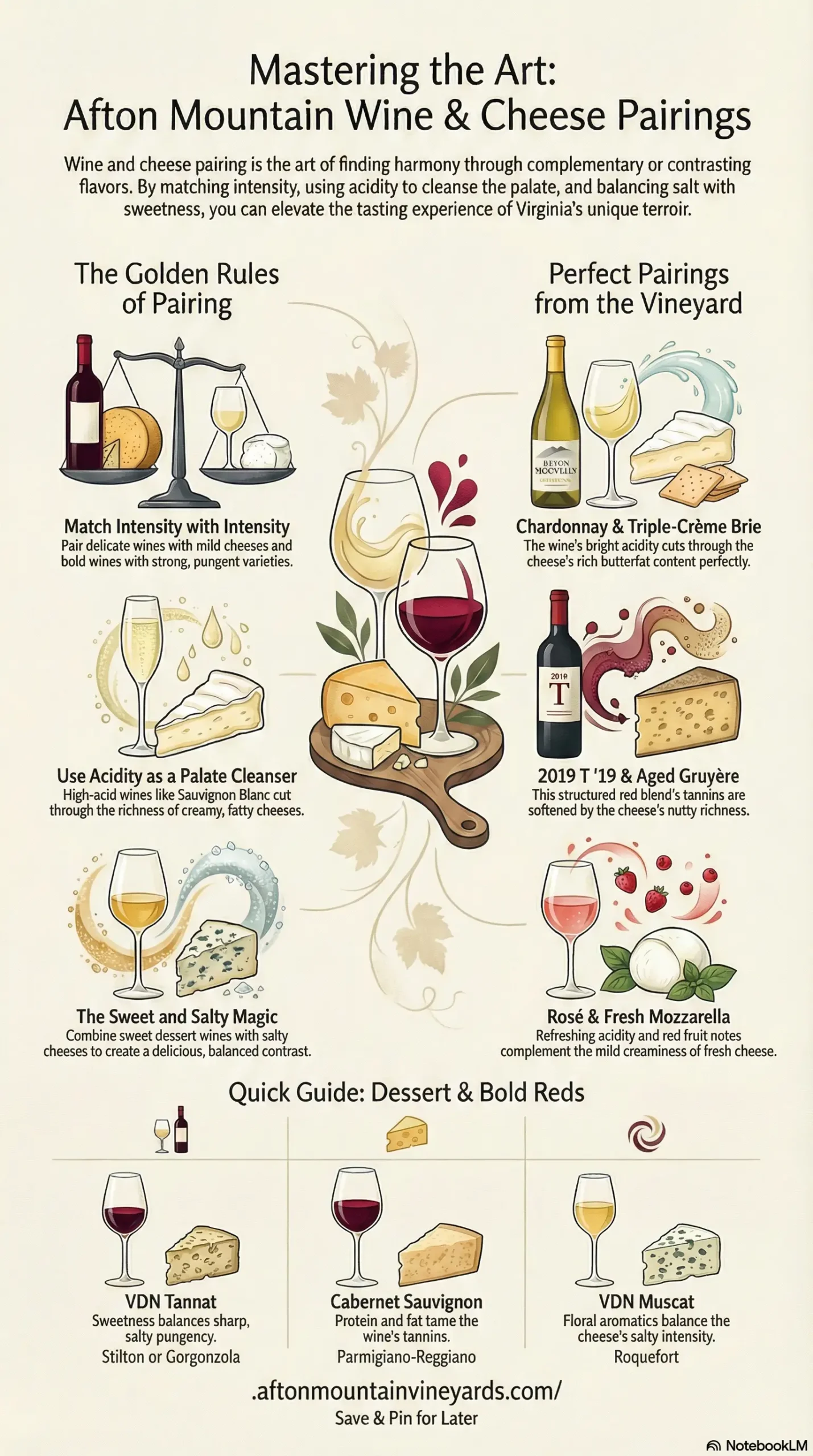
Want to share this infographic?

Conclusion
The art of pairing wine and cheese is ultimately about experimentation and enjoyment. While these guidelines provide a helpful starting point, your palate is the final judge. Visit Afton Mountain Vineyard’s tasting room to explore these wines firsthand, and don’t hesitate to ask for pairing suggestions.