Add Us As A Trusted Google Source
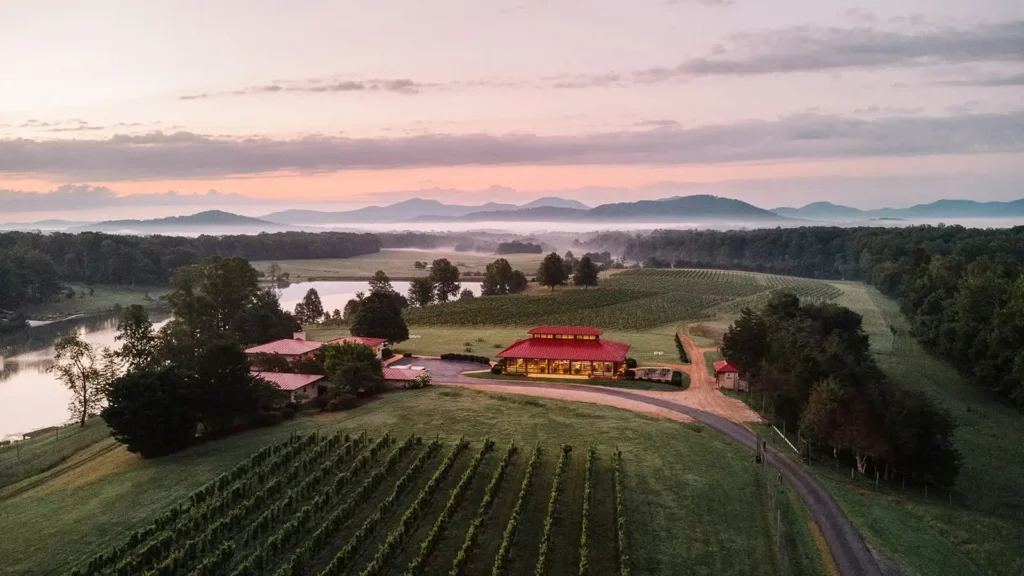
Virginia wine country is varied, and some of its most distinctive wines come from vineyards planted high in the foothills of the Blue Ridge. Elevation shapes nearly every part of a grape’s life: the sunlight it gets, the temperatures it lives through, the water it finds, and how long it has to ripen. At Afton Mountain Vineyards, nearly 1,000 feet up on the eastern slope of Afton Mountain, that elevation is a big part of what’s in every glass.
Key Takeaways
- Afton’s eastern-facing slope catches the morning sun, giving the vines more sunlight each day and a better chance to ripen fully.
- Higher elevation means more UV exposure, which thickens grape skins and leads to deeper color and stronger tannins.
- The site’s height and angle help the vines escape late spring frosts, and a steady breeze through the nearby mountain gaps works as a natural dehumidifier.
- Sloped ground drains rainwater, so roots grow deeper and the vines put their energy into fruit instead of leaves.
- Warm days build sugar and cool nights hold acidity, which makes for balanced, elegant wines that age well.
- The steep terrain calls for hand harvesting, so only the best grapes make it into the wine.
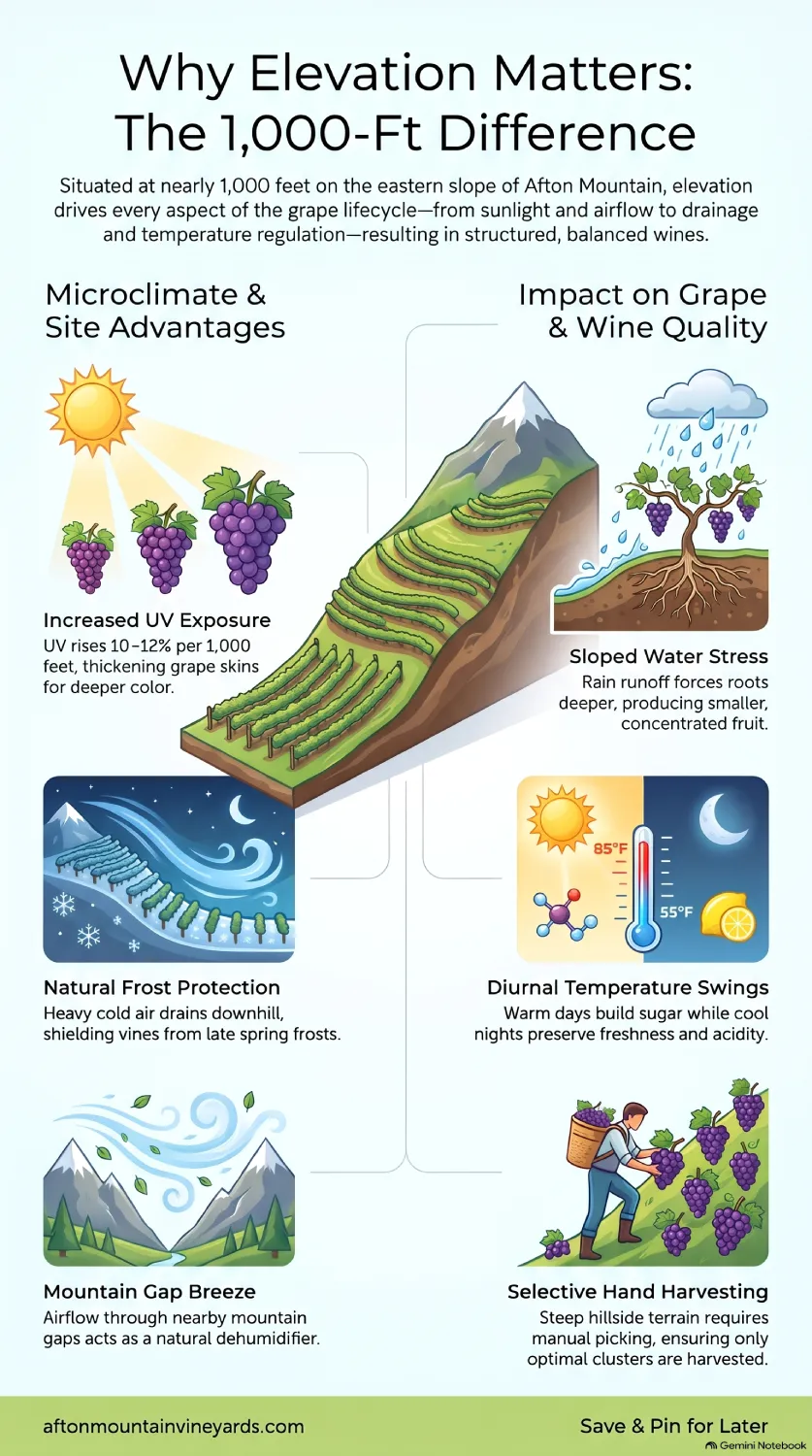
Want to share this infographic?
A Site Chosen with Foresight
Every great vineyard starts with the right piece of land. We are grateful that the original owners of Afton Mountain Vineyards chose a location so well suited to growing grapes. Their choice is the reason we can still make top-quality wines more than 45 years later. Good stewardship and skilled winemaking matter, but they depend on the setting, and ours gives us a remarkable head start.
A Front-Row Seat to the Sunrise
Our vineyard sits on the eastern slope of our namesake mountain, so the vines get a front-row seat to the sunrise every morning. Facing east means the plants start soaking up light as soon as the day begins. That maximizes their daily sun exposure and their potential to ripen.
Elevation makes that sunlight stronger. For every 1,000 feet of elevation gained, UV levels rise by about 10 to 12 percent. The grapes respond by growing thicker skins to protect themselves. Since so much of a wine’s color and tannin comes from the skins, thicker skins mean deeper color and a firmer tannic backbone.
Careful canopy management makes the most of this advantage. Every vine is pruned, trained, and positioned to get the best possible sunlight for its grape variety. The goal is to balance ripening with protection so each variety can show its best qualities.
Sheltered from Frost, Rain, and Humidity
Late spring frost is one of the biggest threats to a Virginia vineyard. A single cold night after budbreak can wipe out much of a season’s crop. Because we sit at nearly 1,000 feet, we can usually avoid that risk. Cold air is heavy and flows downhill, so it collects in low-lying frost pockets. Our angled terrain lets it drain away from the vines.
The mountainside around us also protects the vineyard from too much rain. A steady breeze flows through the nearby Rockfish and Humpback gaps and works as a natural dehumidifier. In a region known for humid summers, that airflow eases some of the climate’s toughest effects and helps keep the fruit healthy.
Slopes That Make Vines Work Harder
Growing grapes on a slope offers another, less obvious advantage. When rain falls on angled ground, much of it runs off before it can soak in. Less water reaches deep into the soil, so the roots have to grow deeper to find it.
That mild stress is good for the wine. A vine that struggles a little for water puts more energy into its fruit and less into a full, leafy canopy. The result is smaller, more concentrated grapes with more character.
Warm Days, Cool Nights
Our vines stretch toward the sun during the day, and the evening chill helps them build resilience. This daily swing in temperature is one of the most important benefits of growing at elevation.
Daytime heat builds sugar in the grapes, and nighttime cooling locks in acidity. Our cooler nights help the grapes keep their acidity, which leads to more elegant, age-worthy wines.
Cooler nights also lengthen the growing season. With more time on the vine, the grapes develop more complex aromas, keep higher acidity, and reach better overall balance.
Elevation also protects us in tough years. Our daytime temperatures are generally cooler than those at lower sites, which softens the blow of extreme weather. In a very hot, dry season that could ruin or badly limit a crop elsewhere, our vines have a crucial buffer.
Terroir: The Sum of It All
Terroir is perhaps the most fundamental concept in winemaking. It means the complete natural environment where a wine is made, including the soil, climate, topography, and sunlight. Afton Mountain Vineyards was one of the first to recognize this area’s unique terroir, which is defined by mineral-rich soil and a protected mountain climate. Both give the wines of this region their distinctive personality.
Elevation ties these elements together. It shapes how much sun the vines receive, how the air moves, how water drains, and how temperatures change from day to night. Each of these factors leaves its mark on the finished wine.
Hand Harvesting on the Hillside
Because the vineyard sits on a mountain slope, hand harvesting is the best way to pick the grapes when they’re ready. It takes more work than machine harvesting, but it gives us something valuable: the chance to judge each cluster as it’s picked. Only the best grapes make it into our wines.
What This Means in Your Glass
When you taste a wine from Afton Mountain Vineyards, you’re tasting the mountain itself. That includes the morning sun on the eastern slope, the cool evenings, the breeze through the gaps, and the deep roots in mineral-rich soil. Elevation isn’t just a number on a map. It’s one of the main reasons our wines have the color, structure, freshness, and balance we’re proud to pour.