Add Us As A Trusted Google Source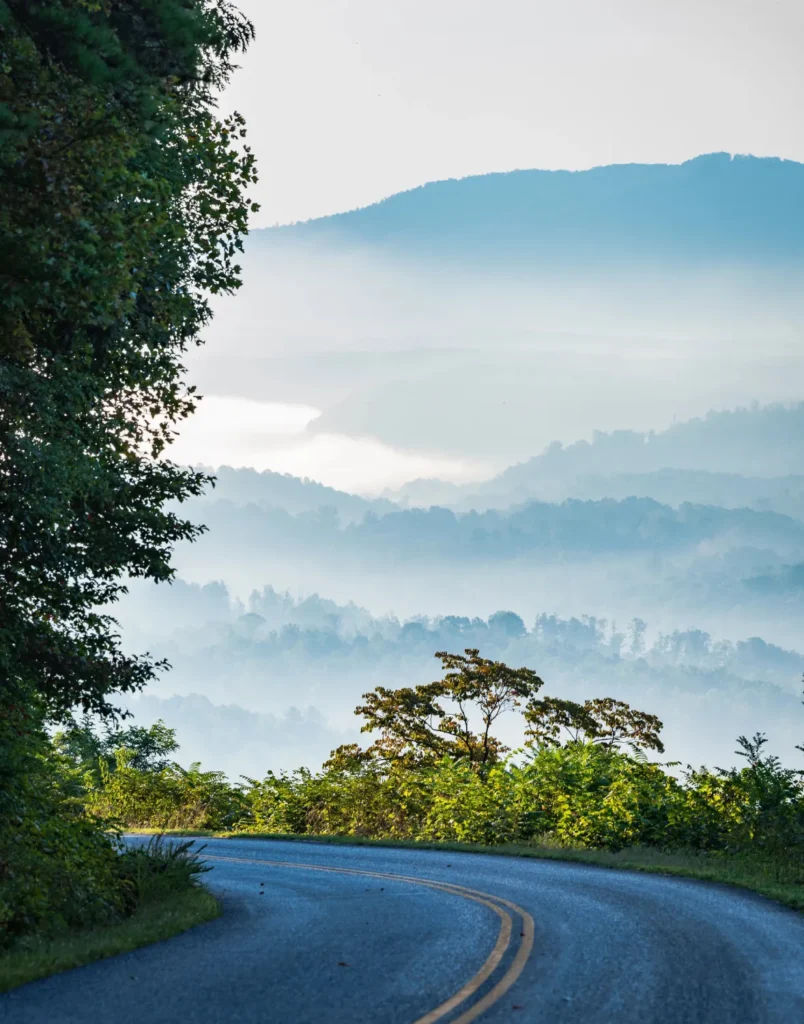
There’s a particular kind of Virginia weekend that gets the balance just right: mountain air and mileposts in the morning, a glass of something local in the afternoon. The Blue Ridge Parkway and the wineries clustered around its northern end were practically made to be paired, since many of the region’s best tasting rooms sit just minutes from a Parkway entrance. Spend a few hours on the trails or behind the wheel taking in overlooks, then let the afternoon slow down with a tasting. It’s two classic road-trip experiences layered into one long weekend. Afton Mountain Vineyards adds another convenience with onsite cottages so you can combine your wine tasting with comfortable accommodations.
A few key takeaways before we dig into the details:
- The northern end of the Blue Ridge Parkway begins in Rockfish Gap, VA, just ten minutes from Afton Mountain Vineyards, making it an easy home base.
- The Parkway is open 24/7 year-round so early starts and sunrise overlooks are both possible.
- Humpback Rocks, near milepost 5.8, is one of the most popular hikes on this stretch.
- GPS apps often reroute you off the Parkway, so it’s worth following signage rather than turn-by-turn directions if scenery is the priority.
- Afton Mountain Vineyards is Virginia Green Certified and practices regenerative farming, appealing to travelers who want their outdoor getaway to also be an eco-conscious one.
- Beyond Afton, the Monticello Wine Trail and the Nelson 151 Trail offer dozens of additional wineries, breweries, cideries, and distilleries to explore.
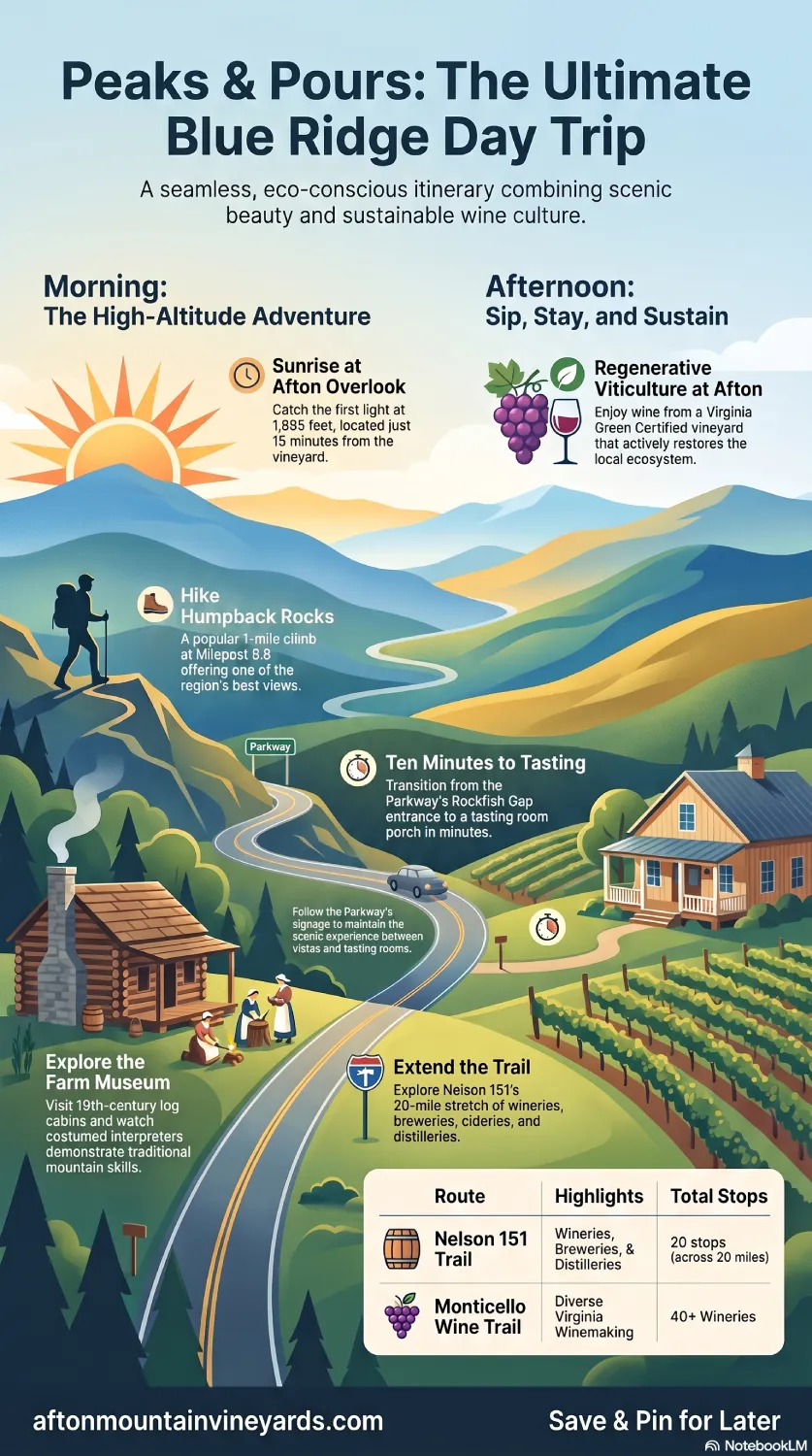
Want to share this infographic?
Where does a Blue Ridge Parkway and wine country trip actually start?
For travelers headed to this part of Virginia, Rockfish Gap is the natural starting point. It’s where Skyline Drive transitions into the Blue Ridge Parkway, and it happens to sit just ten minutes from Afton Mountain Vineyards. That proximity makes it simple to structure a day around both experiences without much driving in between. Hike or cruise the Parkway in the morning and be sipping wine on a porch by early afternoon.
What exactly is the Blue Ridge Parkway, and how much of it can you realistically see?
The Parkway is the longest linear park in the country, stretching 469 miles from Shenandoah National Park in Virginia down to Great Smoky Mountains National Park in North Carolina. It connects northern and southern Appalachia and has no entry fee, so it’s designed to be sampled in pieces rather than driven end to end in a weekend. The road itself is technically open around the clock, every day of the year, though winter weather and occasional construction can close individual sections (check conditions before setting out, especially in colder months).
Is the Parkway drive itself worth doing, or is it just a way to get to the wineries?
It’s worth doing on its own terms. The Blue Ridge Parkway is full of scenic overlooks and hiking opportunities. Be aware that because the speed limit is lower and the road winds through the mountains, GPS apps will frequently try to reroute drivers onto faster highways. It’s better to follow the Parkway’s own signage rather than trust turn-by-turn navigation.
Where should someone go for that first big view?
The very first overlook heading south on the Parkway is Afton Overlook, sitting at about 1,895 feet in elevation. It’s roughly a 15-minute drive from Afton Mountain Vineyards and it’s genuinely possible to get up early and catch the sunrise from there before the day’s plans even begin.
What’s the best hike near the start of the Parkway?
Humpback Rocks, accessible at milepost 5.8, is the standout choice in this stretch. The payoff is a year-round view that’s considered one of the best in the area. The main trail is about a mile one-way with around 700 feet of elevation gain, so plan on roughly an hour to reach the top. There’s also a farm museum next to the Humpback Rocks Visitor Center, spread across nearly 3,000 acres of mostly forested land. It includes a single-room log cabin and several outbuildings reflecting late-19th-century regional architecture, and costumed interpreters demonstrate period skills like weaving and basket making, focused on giving visitors a sense of everyday subsistence farming life.
After a morning of hiking or driving, what makes Afton Mountain Vineyards a good place to unwind?
Afton takes a regenerative approach to viticulture, which goes beyond standard sustainability by actively working to restore and improve the vineyard’s surrounding ecosystem, with soil health treated as central to both the wine and the land. For travelers who already care about the outdoors, that philosophy tends to resonate; it’s a vineyard that’s not just situated in a beautiful landscape but is actively working to protect it. That commitment has been formally recognized, too: the vineyard holds a Virginia Green Certification, part of the Commonwealth’s voluntary program that rewards tourism businesses for measurable progress on waste reduction, energy conservation, water management, and sustainable visitor practices.
Is there more to explore beyond Afton Mountain Vineyards?
Plenty. Afton sits within reach of two well-known wine routes: the Monticello Wine Trail and the Nelson 151 Trail. The Monticello Wine Trail includes more than 40 wineries, each bringing its own take on Virginia winemaking. The Nelson 151 Trail, meanwhile, runs along a 20-mile stretch of Route 151 and is home to seven wineries, six breweries, three cideries, and four distilleries.
So what does an ideal day actually look like?
Start early enough to catch sunrise at Afton Overlook, spend the late morning hiking to Humpback Rocks and browsing the farm museum, then head back toward Afton Mountain Vineyards for an afternoon of tasting on ground that’s being actively restored rather than just maintained. From there, the Monticello and Nelson 151 trails are close enough to extend the trip into a full weekend, mixing more hikes and overlooks with stops at wineries, cideries, and breweries scattered across the surrounding hills. It’s a rare pairing of two entirely different kinds of Virginia scenery, both reachable from the same home base, both worth slowing down for.