Add Us As A Trusted Google Source
Virginia has quietly become one of America’s most exciting wine regions. At the heart of its rise is something beyond just great terroir, it is a deep, genuine commitment to the land. A growing number of Virginia wineries are embracing sustainable, regenerative, and responsible farming practices that not only produce exceptional wines but help protect the very landscape that makes those wines possible. If you are a wine lover looking for your next great escape, here is why a sustainably-farmed Virginia winery, such as Afton Mountain Vineyards, should be at the top of your list.
Key Takeaways
- Virginia wineries that practice regenerative and sustainable farming produce wines that genuinely reflect their unique terroir.
- Hand harvesting is good for the planet and good for the wine. It produces lower carbon emissions and enhances biodiversity all while ensuring only the finest grapes make it into every bottle.
- Farming without herbicides or synthetic insecticides protects local watersheds, soil health, and biodiversity.
- Virginia Green Certification signals a winery’s verifiable commitment to environmental stewardship.
- Techniques like dry farming, composting, and biodynamic preparations create resilient vines and complex, character-driven wines.
- Visiting a sustainable winery isn’t just a tasting. It is an immersive experience in living, breathing agriculture.
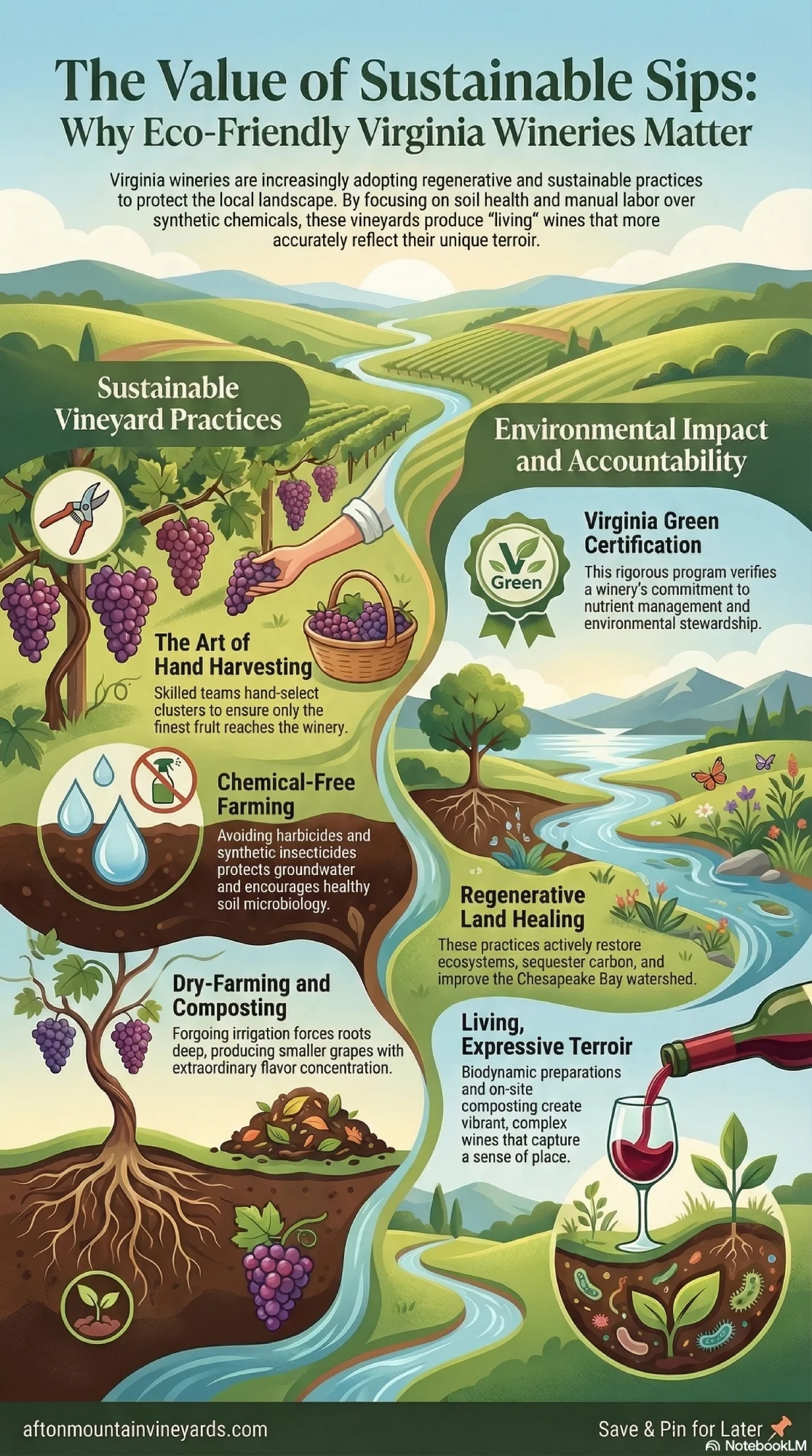
Want to share this infographic?
7 Reasons to Visit a Sustainable Virginia Winery
1. You’ll Taste the Difference That Hand Harvesting Makes
At the best Virginia wineries, harvest is not a mechanical event, it is an art form. Skilled teams move through vineyard rows at dawn, carefully cutting each cluster by hand with specialized shears and immediately sorting out anything less than perfect. This selective picking means only the finest fruit reaches the winery. The result? Wines with greater finesse, cleaner flavors, and a sense of place you simply can’t engineer with a machine. Many wineries along Virginia’s celebrated Nelson 151 Craft Beverage Trail insist on hand harvesting precisely because quality demands it.
2. You Support Vineyards That Are Healing the Land
Regenerative viticulture goes beyond simply doing less harm; it actively restores the ecosystem. Virginia’s clay-rich soils benefit enormously from organic matter additions, reduced tillage, and diverse cover crop rotations. Wineries embracing this philosophy treat the vineyard as part of a larger ecological system, building soil health, enhancing biodiversity, and even sequestering carbon. When you visit and purchase a bottle from a regenerative Virginia winery, you are directly supporting a farm that is working to leave the land better than it found it.
3. You’ll Drink Wine Free of Herbicides and Synthetic Chemicals
The most committed Virginia wineries farm without herbicides or synthetic insecticides, choosing instead to work with nature’s own systems. This chemical-free approach protects local groundwater, encourages healthy soil microbiology, and allows wines to express their truest terroir. There’s something deeply satisfying about raising a glass and knowing the vineyard it came from prioritizes clean farming. That precedence means better health for the earth and for you.
4. Virginia Green Certification Means Accountability You Can Trust
Not every winery that claims to be “sustainable” has the credentials to prove it. The Virginia Green Certification is a recognized, rigorous program that holds participating wineries, and other organizations in the Virginia tourism industry, to verifiable environmental standards. This includes comprehensive nutrient management plans that minimize chemical fertilizers, thoughtful property design to reduce runoff (such as crushed gravel parking areas that allow rainwater to filter naturally into the ground), and a demonstrated commitment to protecting Virginia’s watersheds. Booking a visit to a Virginia Green Certified winery means your tourism dollars are backing genuine environmental stewardship.
5. Biodynamic and Compost Practices Create Living, Expressive Wines
Some Virginia wineries take sustainability even further with biodynamic preparations and on-site composting. Rather than buying synthetic inputs, these farms create their own rich compost from organic materials, returning nutrients to the soil in the most natural way possible. Biodynamic preparations further support soil life and vitality, encouraging a balanced vineyard ecosystem where vines thrive because the ground beneath them is truly alive. The wines produced from such soils are often strikingly vibrant, with a complexity and sense of place that rewards every sip.
6. Dry-Farmed Vines Produce Fruit of Extraordinary Concentration
Forward-thinking Virginia wineries forgo irrigation entirely, encouraging their vines to grow deep, seeking roots that tap into the natural water reserves far below the surface. Virginia’s natural watershed provides ample moisture when farming is done thoughtfully, and the stress of dry farming pushes vines to produce smaller, more concentrated grape clusters. The result is fruit with greater intensity and character. That fruit then produces wines that feel substantial and genuine rather than diluted. A visit to a dry-farmed winery in Virginia is an education in just how much the farming philosophy shapes what ends up in your glass.
7. You’re Part of a Larger Movement Protecting the Chesapeake Bay Watershed
Virginia’s sustainable vineyards don’t exist in isolation. They are active participants in the health of the broader Chesapeake Bay watershed. Reduced chemical runoff, improved soil carbon storage, and regenerative land management all contribute to cleaner waterways and healthier ecosystems far beyond the vineyard’s fence line. Organizations like the Chesapeake Bay Foundation and American Farmland Trust’s Regenerate Virginia program actively support Virginia growers making this transition. When you visit a sustainable winery, your experience (and every bottle you bring home) is part of a meaningful story about the future of farming in the Commonwealth.
Plan Your Visit
Virginia wine country is waiting with rolling mountains, breathtaking views, and glasses poured with genuine care for the earth that produced them. Whether you’re exploring the Monticello Wine Trail or venturing into the foothills of the Blue Ridge, seek out the wineries that have earned their green credentials. Taste the difference that hand harvesting, living soils, and a no-compromise philosophy make. You will probably leave with a few bottles. But you will also leave with a deeper appreciation for what wine can be when it’s made in harmony with the land.